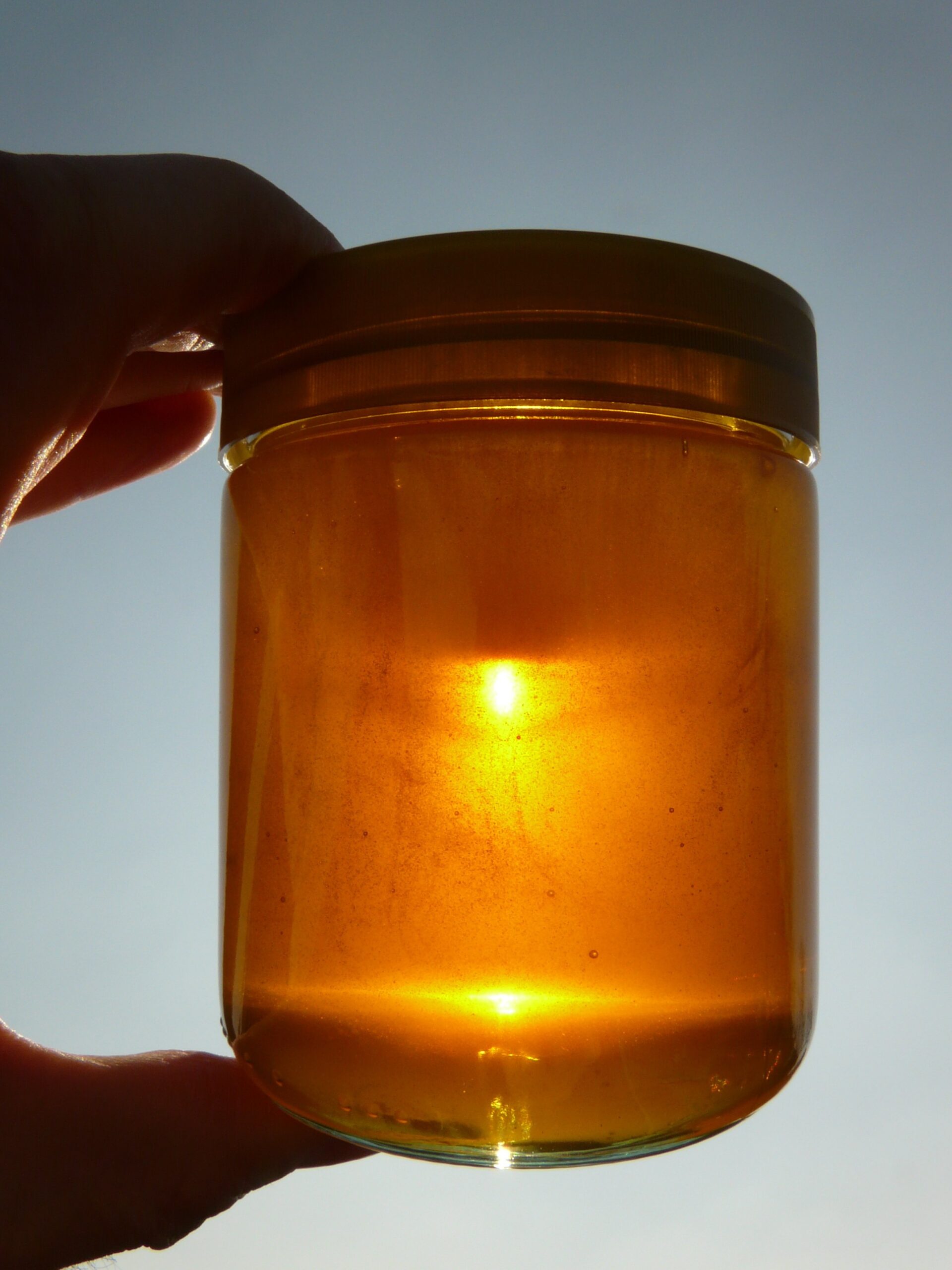
Butter that doesn’t need to be kept in the fridge
I’ve been living without a fridge for many years (20?), whether I’m in Germany, up in the Alps or on Lanzarote. And I really don’t miss it at all. On the one hand, of course, it’s a matter of habit; on the other, there are always interesting solutions to be found. Here’s one of them: ghee
– it tastes like butter, doesn’t burn when baking or frying, is supposedly healthier than butter, easy to digest, lactose-free and… doesn’t need to be kept in the fridge.
🙂
To make it, almost all the milk proteins and most of the water are removed from the butter. It’s much easier than you might think.
Before I tell you how to make ghee yourself, let me first tell you a little about the background.
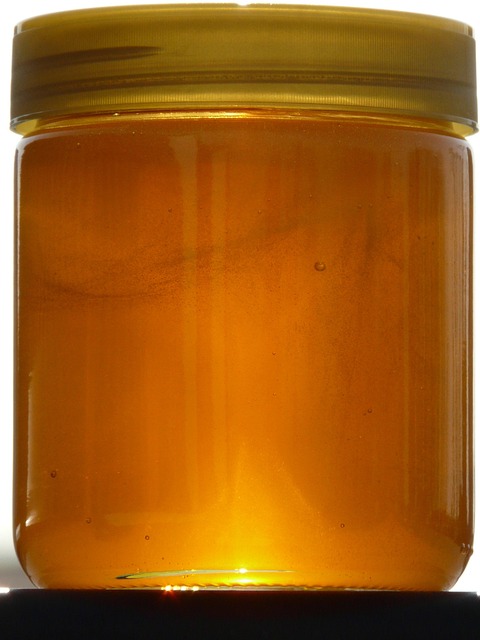
European ghee has a different name
In India and Pakistan, ghee has been a staple in the kitchen for centuries. It then became known in Europe thanks to the hippie movement and its interest in India.
But wait! Whilst that makes sense, it isn’t quite right. In Germany, ‘Butterschmalz’ (clarified butter) had been a traditional staple long before ghee became known. This is essentially the same as ghee, even though, unfortunately, it is now mostly made from dairy by-products.
One might therefore assume that, since the hippie era, German clarified butter has been labelled as ‘ghee’ so that it can be sold as a superior and much more expensive product. But never mind – the product is still good.

Many terms that mean similar things
In French cuisine, you’ll find ‘beurre noisette’ (brown butter) in both old and new recipes. While I’m at it, I don’t want to leave out nut butter, black butter (beurre noir) and white butter (beurre blanc). And then there’s clarified butter too.
Here’s a short list to shed some light on the confusion surrounding these names:
-Butter: a spread made by churning cream from milk
-Ghee: made from butter, with most of the milk proteins and water removed, so it’s almost pure fat.
-Clarified butter: the term professional chefs use for ghee,
-beurre noisette: similar to ghee, but heated more intensely so that the milk sugar caramelises, creating a slightly nutty flavour
-Nussbutter: the German term for ‘beurre noisette’
-beurre noir (black butter): a special French sauce made from ‘beurre noisette’, white wine, capers and parsley, served in particular with skate.
-beurre blanc (white butter): a sauce consisting mainly of butter, shallots and white wine, which is almost white in colour and is served primarily with poultry, fish and asparagus.
I’ll reveal the recipes to you right at the end.
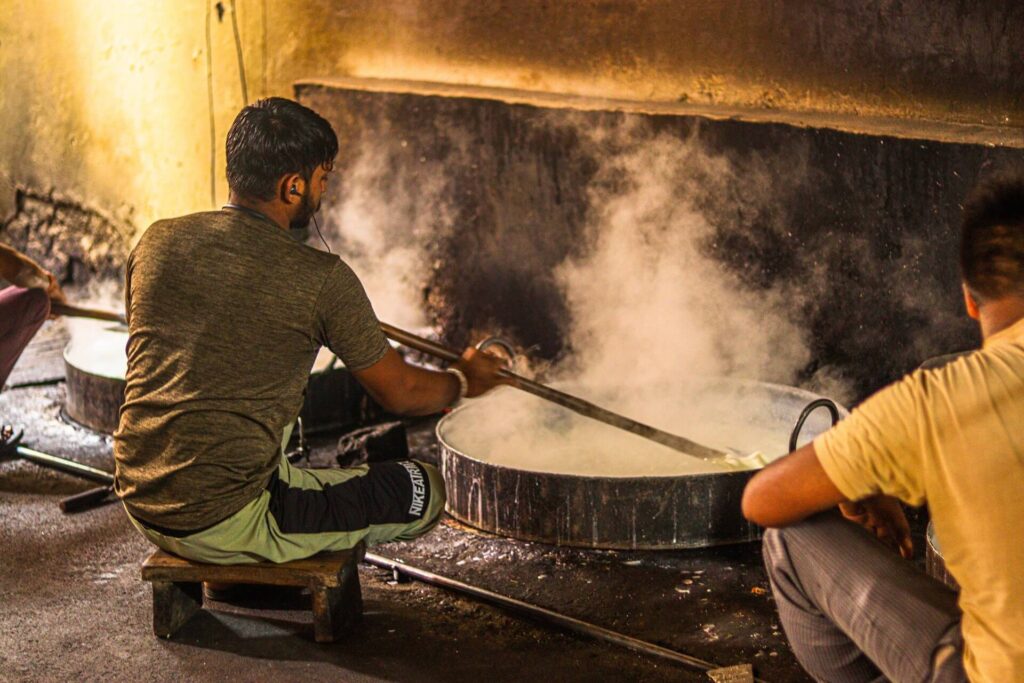
Ghee production in India
Back to ghee. This term also has its pitfalls, as ghee is produced differently in various regions of India and the products vary in quality, taste and shelf life.
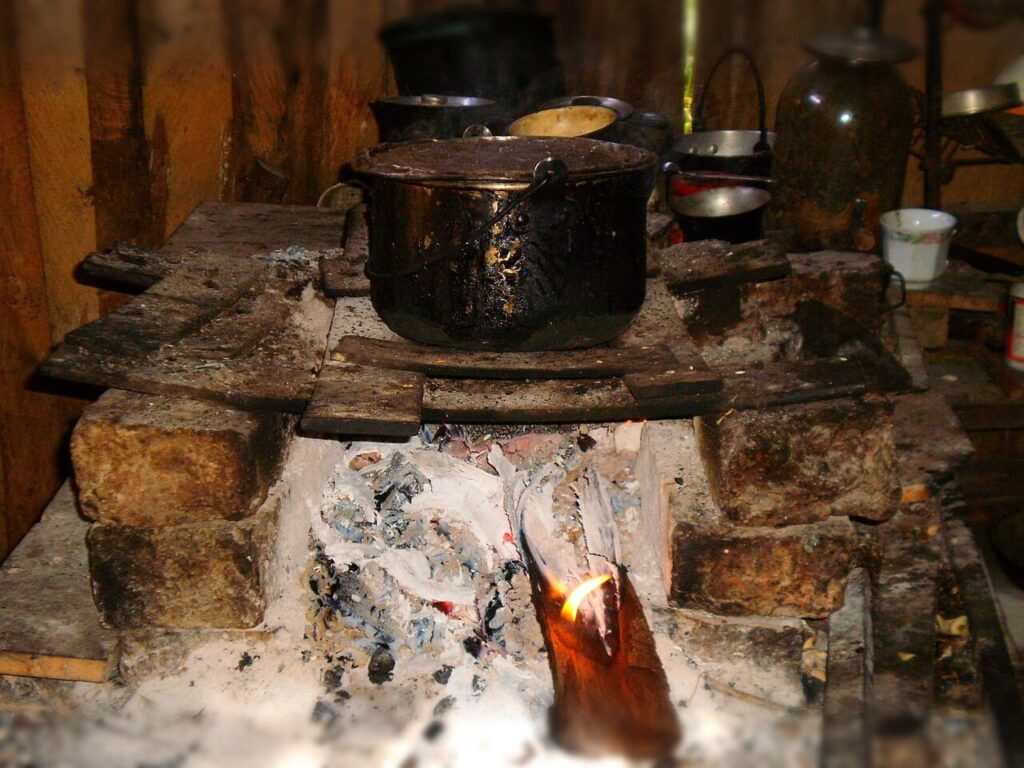
The butter used for the Desi method is collected over a longer period, which is why it is more or less sour. It is gently heated in an iron pot over an open wood or cow-dung fire, and the foam is skimmed off. The ghee obtained in this way has a slightly smoky aroma and has a shorter shelf life than other varieties. The Desi method is used in many Indian households.
In the cream-butter method, which is used in small to medium-sized dairy processing plants, the foam is skimmed off at a low temperature and then the mixture is heated again to a relatively high temperature. This cooking process produces a different flavour and the ghee has a longer shelf life.
For very large quantities of butter, the direct cream method is used, which is much more cost-effective than the production methods described above. The butter-making process is skipped and the cream is skimmed directly from the milk. This is heated, much like in the cream-butter method, and strained after cooling. This type of ghee has a longer shelf life than the others.
In the layered method, the butter is also heated, causing three layers to form (as with the other methods). Denatured quark floats on top, with the fat beneath it, and at the very bottom, buttermilk containing moisture, lactose and solids. The bottom layer is carefully drained through a hole in the pan, after which the remainder is heated again and the quark skimmed off.
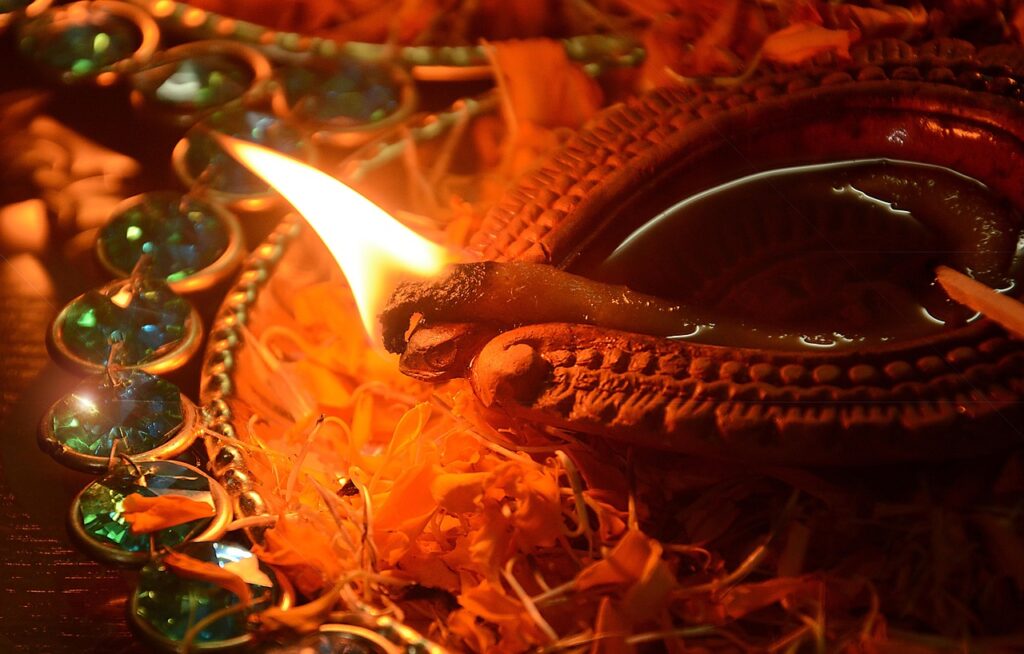
Ghee for Ayurveda and oil lamps
In India, ghee is not only valued for cooking, but is also used in Ayurvedic medicine. It is said to have health-promoting and anti-inflammatory properties. For example, it is warmed and used as an eye bath. Furthermore, most Indian oil lamps are fuelled by ghee.

Is ghee harmful?
I don’t want to hide the fact that I’ve also found evidence suggesting that ghee has toxic and pro-inflammatory properties. It is generally accepted that fats heated (too) highly are unhealthy, as they contain so-called trans fats. If consumed in excess, these can lead to changes in blood values and an increase in cholesterol. They are found primarily in fried foods such as chips and crisps, in ready meals, and in baked goods and confectionery. And also in ghee, if it has been heated to a high temperature or used for frying.
So if you’re very cautious, you should make your own ghee and take care not to heat it too much. And you should avoid nut butters, as they derive their distinctive flavour precisely from this heating process. Personally, however, I don’t banish good nut butter from my kitchen, because although I pay close attention to my diet, I don’t take it all too strictly, as otherwise I’d have to deny myself every biscuit. It all comes down to moderation.
While researching, I found a lot of conflicting information. If you click HERE, for example, you’ll find the information from the Ayurvedic Institute in Munich, which sounds very positive compared to other sources. But I’ll spare you the details of my entire research odyssey. 🙂
Recipes
Now, at last, I’m sharing the recipes with you. If you do try one out, I’d be delighted if you could let me (or all of us) know in the comments how it went. Whether everything worked out, whether it tasted good, or if you have any improvements or variations to share…
Ghee
Heat a knob of butter (or several) over a medium heat in a saucepan. Keep stirring constantly. Once the butter has melted and is simmering gently, turn the heat down to low. A white foam will form, which you can skim off using a fine sieve or a spoon. These are the milk proteins. When the fat underneath becomes completely clear and stops bubbling loudly, instead hissing quietly (after 10–30 minutes), you can turn off the heat and strain the fat. I pour it through a large sieve lined with a clean tea towel or kitchen paper, first into a (glass) measuring jug. This way, I can then easily pour the ghee into smaller containers (such as empty honey jars) and leave it to cool there.
A Syrian friend told me that at his home, they always add a teaspoon of bulgur to the boiling butter. I’ve never tried it myself, but it seems to be quite common in Arabic and Middle Eastern cuisine. The bulgur is said to bind any remaining water and proteins, thereby making the fat even purer. It is also said to make straining easier, as the impurities collect at the bottom and clump together with the bulgur. Alternatively, a little salt or a piece of bread can be added to achieve the same effects. But as I said: I have no experience with this.
Nussbutter
If you leave the boiling butter on the hob a little longer, the lactose at the bottom will caramelise. This makes the butter slightly darker and gives it a faint nutty aroma. As soon as you notice this smell, you should take the pan off the heat straight away, because if the butter gets too dark, it won’t taste good and may even turn bitter. But if you time it just right, you’ll end up with something truly special in your kitchen.
The nutty butter tastes excellent with asparagus, cauliflower, broccoli, celery or even avocado. You can use it to enhance fried fish and white meat. It adds a special touch to pasta, mashed potatoes, gnocchi, dumplings or rice, and can be used in dough when baking.
beurre noir (black butter)
is a classic dish in French cuisine. Heated nut butter is deglazed with vinegar, lemon juice or white wine (I prefer lemon juice) and is usually finished with capers and fresh parsley. A very well-known dish featuring this sauce is ‘Raie au beurre noir’ (skate in black butter), as it goes particularly well with white fish. However, it also tastes very good with vegetables and eggs.
beurre blanc (white butter)
First, cut the butter into small cubes and chill thoroughly. Then finely chop the shallots and gently sweat them. They should not become translucent or change colour. Add a dry white wine and reduce the mixture significantly, at least by half, or preferably to a third. Allow to cool until the pan is cool enough to handle. Over a low heat, gradually whisk in the cold butter. It must not melt until translucent, but should remain frothy and white. Season with a little salt and white pepper. Finally, the sauce can be passed through a sieve.
This sauce is particularly delicious with fish and poultry.
Bon appétit!